Introduction
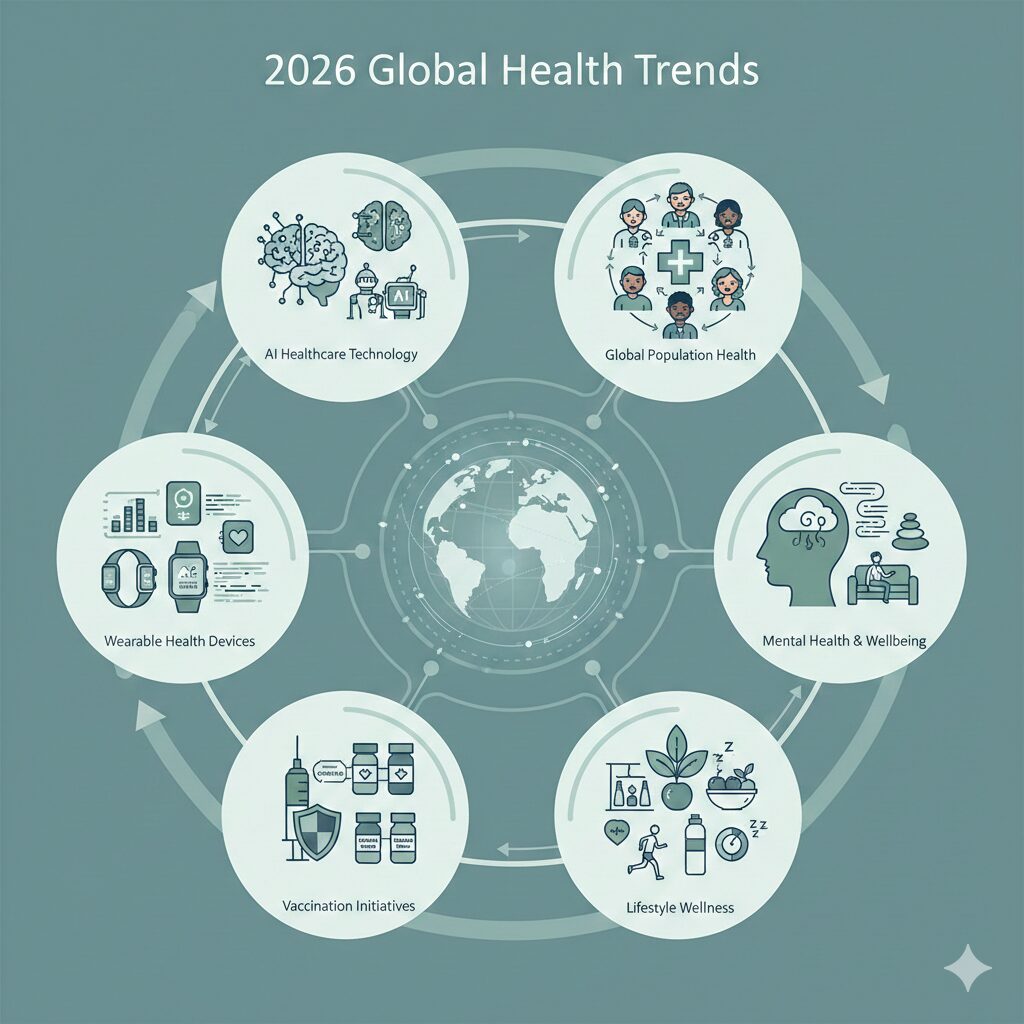
Health is no longer just a personal matter — it is a global priority. As we move through 2026, healthcare systems, public health policies, and individual wellness behaviors are evolving rapidly across continents. From artificial intelligence in diagnostics to rising mental health awareness and preventive medicine strategies, the global health landscape is undergoing a significant transformation.
According to the World Health Organization, noncommunicable diseases, mental health conditions, and health inequities remain leading concerns worldwide. Meanwhile, digital health innovation and personalized medicine are reshaping how individuals manage their well-being.
In this article, we explore the most important global health trends in 2026, the challenges shaping healthcare systems internationally, and what individuals can do to stay ahead in a rapidly changing environment.
1. Preventive Healthcare Becomes the Global Standard
Across North America, Europe, Asia-Pacific, and parts of Africa, healthcare systems are shifting toward prevention rather than treatment.
Preventive healthcare now emphasizes:
-
Early disease screening
-
Personalized risk assessments
-
Lifestyle medicine programs
-
Routine biometric tracking
Governments and healthcare institutions are investing more in community-based prevention strategies to reduce long-term healthcare costs and improve quality of life. Chronic conditions such as heart disease, diabetes, and cancer account for the majority of global mortality, making early intervention critical.
Preventive healthcare is no longer optional — it is becoming a global necessity.
2. AI and Digital Health Are Transforming Medicine
Artificial intelligence is one of the most influential forces in global healthcare. From AI-powered diagnostics to predictive analytics in hospitals, technology is improving speed, efficiency, and accuracy in medical decision-making.
Key developments include:
-
AI-assisted radiology and pathology
-
Remote patient monitoring devices
-
Telemedicine platforms expanding rural access
-
Wearables tracking heart rate, glucose levels, and sleep cycles
The World Economic Forum highlights AI as a major driver in healthcare transformation, improving patient outcomes while reducing operational costs.
However, ethical considerations remain critical:
-
Data privacy concerns
-
Algorithm bias
-
Overreliance on automated advice
Digital health offers remarkable potential — but requires responsible regulation and transparency.
3. Mental Health Is a Global Public Health Priority
Mental health awareness has significantly increased worldwide. Anxiety disorders, depression, stress-related illnesses, and burnout are rising across all age groups.
The World Health Organization estimates that depression is among the leading causes of disability globally. Mental health is now recognized as equally important as physical health.
Global trends in 2026 show:
-
Expansion of digital therapy platforms
-
Workplace mental wellness programs
-
Greater integration of mental health into primary care
-
Reduced stigma through public awareness campaigns
Addressing mental health is no longer secondary — it is central to overall well-being.
4. Chronic Disease and Lifestyle Medicine
Noncommunicable diseases (NCDs) account for nearly 75% of global deaths, according to global health data. These include:
-
Cardiovascular diseases
-
Type 2 diabetes
-
Obesity
-
Respiratory diseases
The OECD reports that lifestyle-related diseases are placing increasing pressure on healthcare systems worldwide.
Lifestyle medicine is emerging as a key solution. It focuses on:
-
Whole-food nutrition
-
Physical activity
-
Sleep hygiene
-
Stress management
-
Reducing harmful substance use
The shift toward lifestyle-based interventions represents one of the most promising global health strategies of this decade.
5. Global Vaccination and Public Health Preparedness
The COVID-19 pandemic permanently changed how countries approach public health preparedness. In 2026, vaccination programs and outbreak surveillance remain central priorities worldwide.
The Centers for Disease Control and Prevention and international public health bodies continue to emphasize:
-
Routine immunization updates
-
Pandemic preparedness planning
-
Strengthened global disease monitoring networks
Despite scientific progress, vaccine hesitancy and misinformation remain global challenges. Public trust and transparent communication are essential to maintaining herd immunity and preventing future outbreaks.
6. Personalized and Precision Medicine
Precision medicine — tailoring treatment based on genetics, environment, and lifestyle — is becoming more accessible internationally.
Advancements include:
-
Genetic screening for disease risk
-
Customized treatment plans
-
Targeted cancer therapies
-
Biomarker-driven diagnostics
While costs remain a barrier in some regions, global investment in biotech research is making personalized care increasingly viable.
Precision medicine represents the move from “one-size-fits-all” healthcare to individualized strategies that improve treatment success rates.
7. Health Equity and Access Disparities
One of the most pressing global challenges remains healthcare inequality. Access to essential services still varies significantly between high-income and low-income countries.
Key global concerns include:
-
Limited rural healthcare access
-
Medication affordability
-
Shortage of trained healthcare professionals
-
Infrastructure limitations
Global health organizations are prioritizing universal health coverage and cross-border collaboration to reduce disparities and improve outcomes worldwide.
Health equity is not just a moral issue — it is fundamental to sustainable global development.
8. Longevity and Healthy Aging
With global life expectancy increasing, healthy aging has become a major focus. However, experts emphasize that longevity should prioritize quality of life, not just lifespan.
Healthy aging strategies include:
-
Strength training and mobility exercises
-
Cognitive health programs
-
Social engagement initiatives
-
Preventive screening in older adults
Balancing science-based longevity strategies with mental well-being is essential to avoid extreme or unproven health trends.
Conclusion
The global health trends of 2026 reflect a powerful shift: healthcare is becoming more preventive, more personalized, and more digitally integrated. At the same time, mental health awareness, lifestyle medicine, and health equity remain central priorities.
For readers of Medicated Insights, staying informed about these global developments empowers better decision-making — whether it involves adopting healthier habits, understanding emerging medical technologies, or engaging in public health discussions.
The future of health is not just clinical — it is holistic, data-driven, and globally interconnected.